Skechers represent a significant share of the comfort shoe market in France. Their memory foam technology attracts both casual walkers and professionals who stand all day. Podiatrists, however, do not have a uniform judgment on the brand: their analysis varies depending on the range, the wearer’s profile, and the duration of use.
Rapid transition to soft soles: an underestimated injury factor
Sports podiatrists have noticed an increase in consultations for Achilles tendon and calf pain among individuals who abruptly switched to highly cushioned Skechers after wearing firmer shoes or those with a higher drop. The issue does not stem from the brand itself, but from the transition being too rapid.
A foot accustomed to rigid support and a raised heel undergoes a sudden biomechanical change when switching to a soft, flat sole. Tendon structures, particularly the Achilles tendon, need to adapt gradually. Several practitioners recommend a transition period of a few weeks, alternating between the old and new model, so that the stress on the Achilles tendon decreases gradually.
This transition phenomenon partly explains why some wearers associate Skechers with pain, while others have no issues. The opinions of podiatrists on the quality of Skechers largely depend on the context of use and the patient’s footwear history.
Skechers by range: what podiatrists really distinguish
Since 2023, podiatrists no longer make a blanket judgment on Skechers. The brand markets collections with very different mechanical characteristics, and grouping them together is akin to comparing a soft city shoe with a structured running model.
| Skechers Range | Sole Type | Dominant Podiatric Opinion | Suitable Profile |
|---|---|---|---|
| Go Walk (soft foam) | Very soft, low drop | Reserved for short distances, risk of rapid compression | Light walking, occasional use |
| Max Cushioning | Maximum cushioning, soft | High initial comfort, loss of support after a few months | Moderate walkers without pathology |
| Arch Fit (APMA certified) | Arch support, more rigid | Best perceived range by podiatrists | Daily use, standing workers |
| Uno / Street | Thick sole, little support | Fashion use, little podiatric value | Occasional outings |
The Arch Fit range stands out significantly in podiatric evaluations. Its certification by the American Podiatric Medical Association (APMA) is based on more pronounced arch support and above-average rigidity compared to other collections. Podiatrists who recommend Skechers almost systematically direct patients towards this range.
In contrast, the Go Walk and Uno models frequently receive reservations. The foam compresses after a few months of intensive use, and lateral support remains weak. For prolonged daily use, these ranges pose a problem of mechanical durability.
Skechers in hospital settings: usage guided by podiatrists
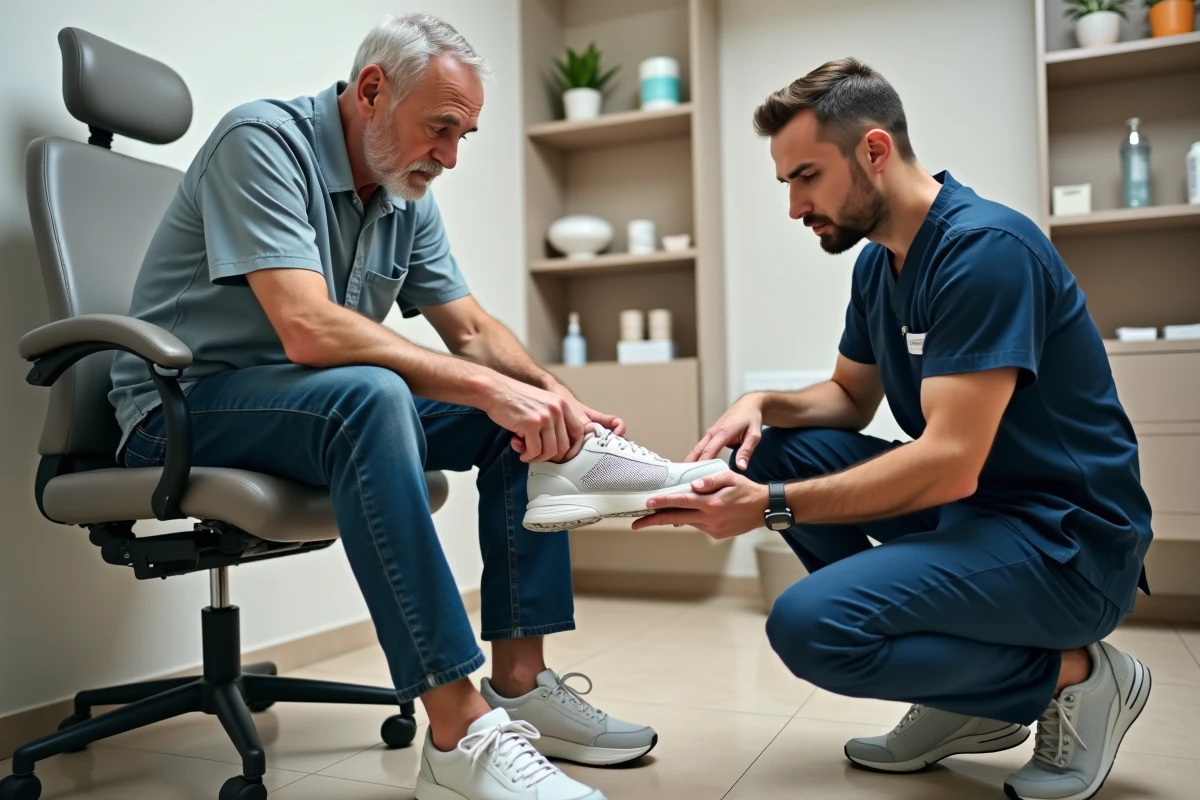
Several hospital departments specializing in diabetology and French wound care centers have integrated certain Skechers models into their lists of acceptable city shoes for at-risk podiatric patients. The selection criteria are precise:
- Wide shoes, without marked internal seams that could create friction points on a weakened foot
- Removable insole allowing the addition of custom orthotics prescribed by the podiatrist
- Soft materials that do not compress deformed toes or areas at risk of ulceration
This hospital integration nuances the overall discourse. The problem is not the brand but the chosen model and how it is used. A diabetic patient wearing a wide Skechers with an orthotic insole benefits from appropriate footwear. The same patient with a narrow Uno model without a removable insole exposes themselves to complications.
Durability of Skechers foam: the weak point identified by podiatrists
Podiatrists working with standing workers (nurses, caregivers, salespeople) report a recurring pattern. The very soft Skechers are well tolerated in the first months, but the loss of foam support leads to pain after a few months of intensive use.
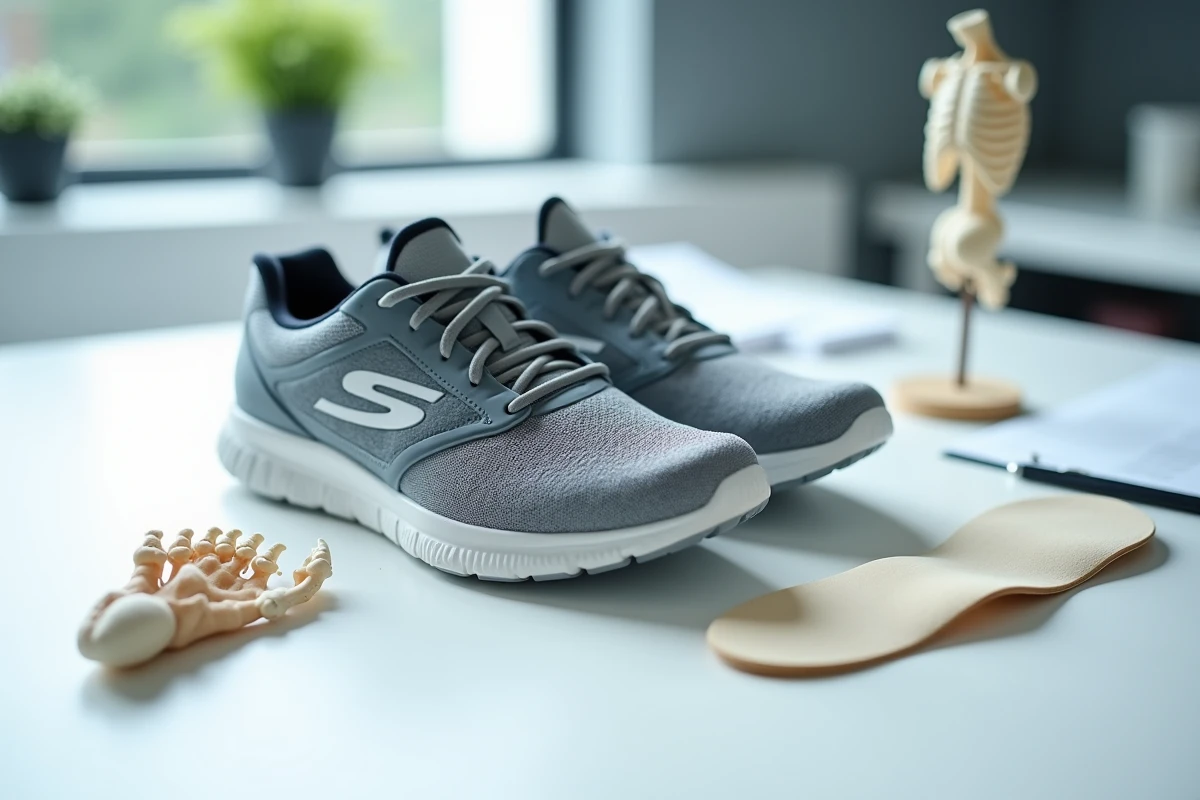
The gradual compression of the sole alters the foot’s support angle. The arch loses its support, the heel sinks further, and the stresses redistribute towards the forefoot and Achilles tendon. This phenomenon particularly affects individuals who walk or stand for more than six hours a day.
Podiatrists who follow these patients recommend monitoring the wear of the insole and replacing the pair as soon as the foam no longer regains its original shape after a night of rest. A few criteria can help check the condition of a shoe:
- Pressing the thumb in the center of the sole: if the imprint remains visible for several seconds, the foam is compressed
- Placing the shoe on a flat surface and observing if it tilts to one side, a sign of asymmetrical wear
- Checking that the insole is not glued to the bottom (it should remain removable to accommodate an orthotic)
At-risk profiles: when Skechers’ softness becomes a problem
Podiatrists identify profiles for which soft models pose more difficulties. Overweight individuals compress the foam more quickly, reducing the shoe’s useful lifespan. Patients suffering from ankle instability lose the little lateral support that entry-level models provide.
Individuals with plantar fasciitis experience misleading initial relief. The foam absorbs shocks in the short term, but the lack of rigidity under the arch allows the plantar fascia to stretch. Several testimonials on specialized forums corroborate this observation: the comfort felt during fitting does not predict the shoe’s behavior after several weeks.
In contrast, the Arch Fit range, with its enhanced arch support, receives more favorable feedback over time, including for plantar fasciitis. The choice of model within the brand matters more than whether or not to wear Skechers.
The data collected by podiatrists paint a coherent picture: no Skechers range is suitable for all feet. The soft foam is appealing during fitting, but its durability and support vary significantly from one collection to another. An informed choice involves identifying one’s range, checking the removability of the insole, and paying particular attention to the rate of wear.