
The siphon is a plumbing component that is rarely replaced by choice. It is addressed when a leak appears, when an odor rises, or when a new sink is waiting to be connected.
The problem is that the siphon aisle in a DIY store offers dozens of references without clear indications of what is suitable for each situation. Diameter, shape, material, height available under the basin: these technical parameters determine the proper functioning of the drainage, and a poor choice can lead to odor issues or repeated disassemblies.
Water seal and tightness: what really makes the difference
Before comparing shapes or materials, one criterion deserves to be understood first: the water seal. This is the height of water that remains trapped permanently in the siphon after each drainage. This hydraulic seal prevents sewer gases from rising into the room.
A siphon with a water seal that is too low dries out quickly, especially at a rarely used water point (guest bathroom, laundry room). Odors then return without any visible leaks. Conversely, a very high water seal slows down drainage and complicates cleaning.
To select the right siphon, it is essential to check that the water seal corresponds to the actual use of the water point. For a daily use shower, a moderate water seal is sufficient. For a kitchen sink used several times a day, it must be adequate to withstand the siphoning effect caused by other devices connected to the same drainage network.
Tightness depends as much on the seal as on the tightening. A well-chosen siphon but poorly installed will leak. The flat seal rings on the waste side and the conical seals on the drainage pipe side must be compatible with the exact diameters of the existing connections.

Drainage diameter and space constraints under the basin
The outlet diameter of the siphon must match that of the wall drainage pipe. The most common diameters in France are 32 mm (sink, bidet) and 40 mm (kitchen sink, bathtub, shower). Connecting a 32 mm siphon to a 40 mm drainage requires a reducing sleeve, which adds a junction point and thus an additional risk of leakage.
Measure before buying
The height available between the underside of the waste and the center of the wall drainage pipe determines what type of siphon can be installed. A classic bottle trap siphon requires more vertical space than a space-saving model. Under a basin placed on a narrow cabinet, the space is sometimes so limited that the only option left is an extra-flat siphon.
Measure the available height and the drainage diameter before any purchase. These two data points immediately eliminate half of the references on the shelf and avoid a back-and-forth trip to the store.
Bottle trap, tubular siphon, or extra-flat model: which for what use
The three main families of siphons are not equal depending on the intended installation. Their differences lie in bulkiness, ease of maintenance, and resistance to clogs.
- The bottle trap siphon (bottle shape) remains the most common under sinks. Its removable bottom allows for easy retrieval of an object that has fallen into the waste or for cleaning a clump of hair, without disassembling the entire connection.
- The tubular siphon (S or P shape) offers a smoother flow rate and clogs less quickly. However, it takes up more space and allows small objects to pass through to the drainage network, complicating their retrieval.
- The extra-flat or space-saving siphon is suitable for shallow under-basin cabinets and Italian showers. Its low height often implies a reduced water seal, with the risk of drying out mentioned earlier for rarely used water points.
The choice between these three families thus primarily depends on space constraints, followed by the frequency of use of the water point.
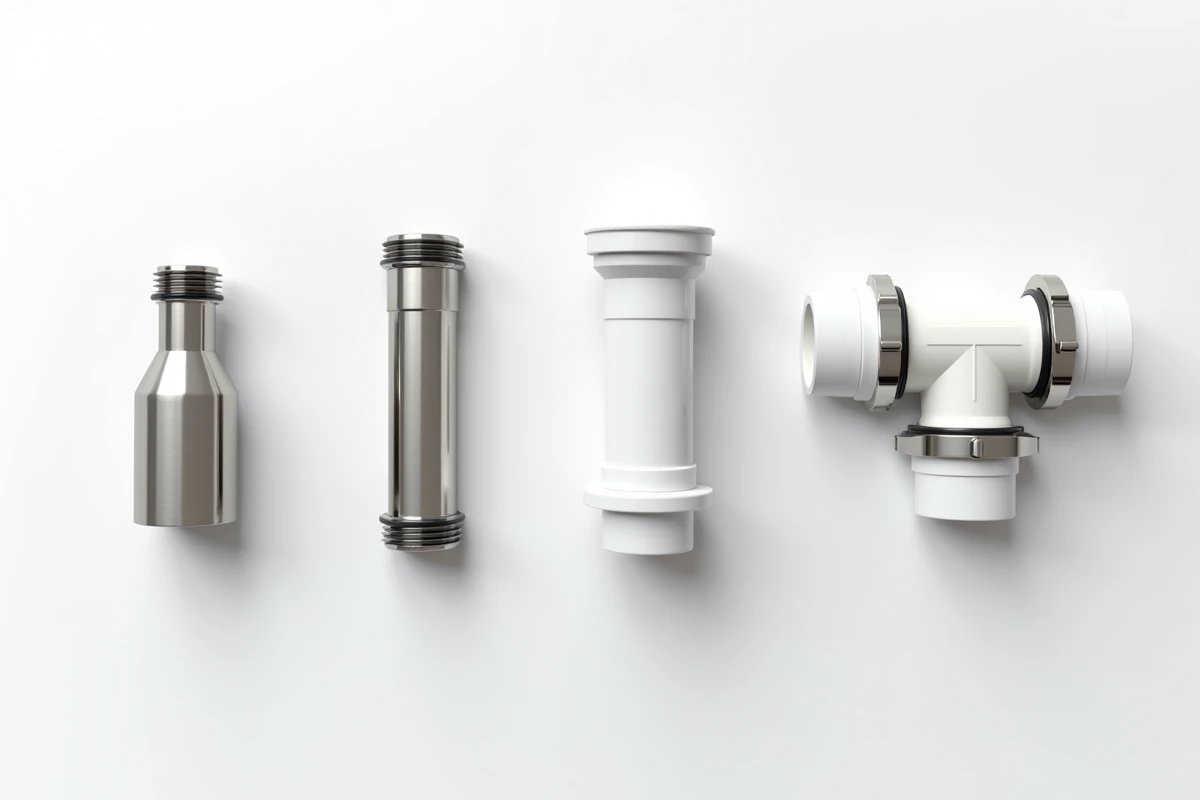
Siphon materials: plastic, brass, or stainless steel
The material influences the durability, price, and appearance of the siphon. Polypropylene (plastic) dominates the market for common installations. It withstands cleaning products well, does not corrode, and is inexpensive.
Chrome or brushed brass is preferred when the siphon remains visible, for example, under a wall-mounted basin without a cabinet. An exposed brass siphon contributes to the bathroom’s aesthetics, but requires regular maintenance to avoid limescale stains.
Stainless steel is mainly found in professional installations (collective kitchens, laboratories) or on high-end shower drains. Its corrosion resistance is superior to that of brass, but its price often excludes it from standard residential projects.
Compatibility with chemical products
Chemical drain cleaners based on concentrated soda can weaken the seals of a low-quality plastic siphon. On a brass siphon, these same products eventually attack the chrome plating. Prioritizing regular mechanical maintenance (disassembling the bottom, using a snake) preserves the lifespan of the siphon regardless of its material.
Common mistakes when replacing a siphon
Two mistakes frequently arise in plumbers’ feedback.
- Reusing old seals when replacing the siphon. A flat or conical seal that has already been compressed does not return to its original shape and no longer guarantees tightness, even if the new siphon is identical to the old one.
- Tightening the rings with pliers rather than by hand. Excessive tightening crushes the seal and deforms the ring, causing a slow leak that may only appear several days after installation.
- Neglecting the slope between the siphon and the wall drainage. Without a slight incline toward the wall, water stagnates in the horizontal connection and promotes soap and grease deposits.
On a kitchen sink connected to a dishwasher, also check that the machine connection is located above the water seal level. A connection that is too low can cause dirty water to backflow into the dishwasher when draining the sink.
Replacing a siphon remains a simple task when the measurements are taken in advance. The right reflex is to start from the physical constraints (diameter, height, frequency of use) rather than from price or appearance. A siphon suited to its context functions without special maintenance for several years, whereas a poorly sized model generates nuisances from the first weeks.