
34%: this is the growth of distance learning in French public institutions since 2019, according to figures from the Ministry of National Education. Yet, barely one in three teachers feels truly prepared to handle digital tools in the classroom.
The massive adoption of digital technology in French schools is not without its challenges. Access gaps persist, the pedagogical usefulness of new tools is debated, and many local initiatives remain in the shadows. Teaching practices are evolving, driven by public policy pressure, the proliferation of technological innovations, and the need to prepare students for a digital society.
Digital Technology in Schools: Current State and Challenges for France
It is impossible to ignore: the integration of digital technology in schools has accelerated to become a major turning point for education. The pandemic and lockdowns have only amplified this ongoing movement. Digital learning is no longer just a tool; it reshuffles the cards of access to knowledge, highlights flaws, and forces the education system to reinvent itself. The Ministry of National Education, through its digital department, seeks to leverage all the possibilities offered by digital technologies. The stated goal: to open learning to all, diversify pathways, and equip students for a society where computing is omnipresent.
Here are some key points to remember about this digital transformation:
- Online teaching and MOOCs open knowledge to a broader audience, beyond the traditional boundaries of the classroom.
- The digital competence framework certified by Pix provides a clear structure for evaluating students’ digital skills.
- New tools, such as learning analytics, artificial intelligence, and virtual or augmented reality, are emerging as new ways to learn.
Despite this momentum, the digital divide remains very real. Some students find themselves sidelined due to lack of access or mastery of tools. Digital illiteracy, regularly highlighted by the Senate, disrupts ambitions for equality. At the same time, data protection has become a central concern, governed by GDPR and CNIL, as tools become more sophisticated. The national digital education conference has produced 40 proposals for progress, but their implementation varies greatly from one region to another.
Debates are multiplying, and society is questioning. The promises of the metaverse or blockchain are both exciting and concerning. On alephzarro.com, the ‘Aleph Zarro – News’ section analyzes these developments, gives a voice to change-makers, and closely follows this digital laboratory that French schools have become.
What tools and practices are concretely transforming teaching today?
Pedagogical innovation is making its way everywhere: classrooms, lecture halls, training spaces. Teachers, supported by the Canopé network, are testing, experimenting, and adopting new tools to renew their pedagogy. Digital workspaces (ENT) are becoming central platforms: managing assignments, accessing resources, tracking calendars—all is done digitally. The relationships between teachers, students, and families are becoming more fluid, and information circulates faster.
Among the solutions that are shaking up daily life, we find:
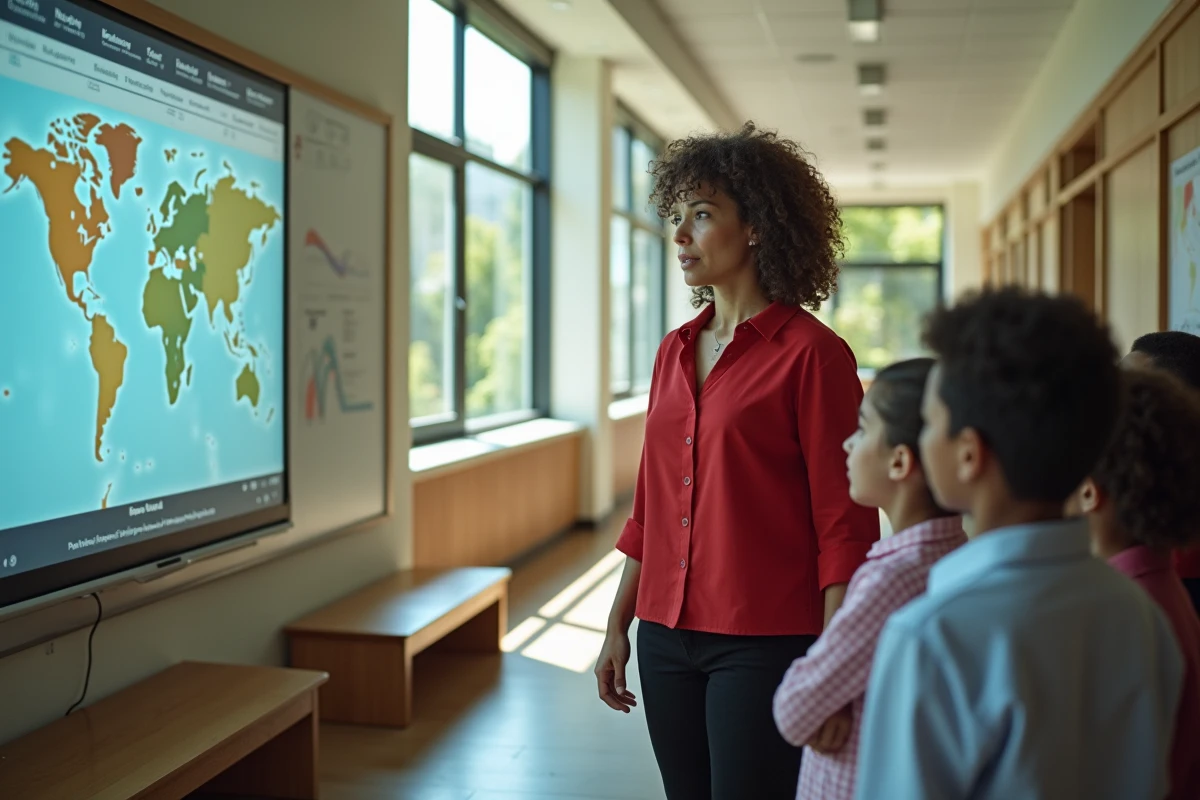
- Interactive whiteboards and tablets renew classroom dynamics. A collectively annotated diagram, a simulated science experiment, a writing assignment enriched with images or videos: learning becomes more vibrant, and students’ attention intensifies. Digital textbooks allow content to be tailored to each level, enabling differentiated pedagogy.
- Interactive quizzes and assessment platforms provide immediate feedback, valuable for adjusting progress and maintaining motivation.
- Collaborative document-sharing tools simplify the management of group projects, enhancing cooperation and autonomy.
- The National Centre for Distance Education (CNED), with “My Class at Home,” offers easy access to online courses from primary to high school.
The arrival of these tools pushes teachers to engage in continuous training. Methods are diversifying, digital technology opens new avenues, but it also raises questions about equitable access and the quality of usage for all students.
Tangible Benefits for Teachers and Students: Feedback and Perspectives
In daily life, digital technology changes the game for both teachers and students. At ITIC Paris, for example, students alternate between e-learning, in-person, and remote learning based on their needs. Teachers observe a clear evolution: more flexibility to adapt pathways, a broader range of resources, and the ability to track each student’s progress in real-time.
Personalized learning becomes tangible: platforms offer tailored exercises, interactive quizzes to check understanding, and supplementary resources accessible at any time. This individualization enhances engagement, particularly for those who benefit from specific support. Interaction no longer stops at the classroom door: thanks to ENT, follow-up becomes more precise, and feedback is quicker.
Teachers see this transformation as a way to equip young people for a labor market in constant flux. The integration of digital technology develops transversal skills: autonomy, project management, and remote collaboration. Training and institutional support bolster this dynamic.
The benefits are numerous:
- Students acquire digital skills sought after by employers.
- Teachers become more responsive and can more easily adapt their methods to the real needs of students.
Yet, the challenge remains: ensuring access for all, preventing the digital divide from widening, and protecting personal data. But the momentum has been set in motion. The shock of the lockdown accelerated the adoption of tools, demonstrating all that digital technology can bring to a more flexible, open learning experience that aligns with the challenges of the 21st century.