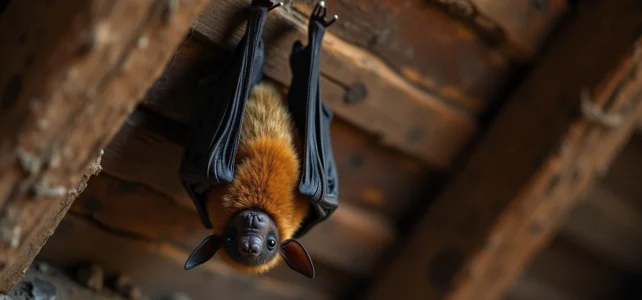
When a bat enters a home, reactions range from panic to fascination. This nocturnal animal carries spiritual meanings that vary radically across cultures, eras, and even recent health contexts. Rather than listing scattered beliefs, this article compares major interpretative frameworks to identify what brings them together and what sets them apart.
Symbolism of the Bat: A Comparison Between Cultural Traditions
The spiritual reading of a bat in the house primarily depends on the cultural framework in which one finds themselves. Some traditions see it as a harbinger of concrete happiness, while others view it as a call for inner transformation.
| Tradition | Main Interpretation | Register |
|---|---|---|
| Feng shui and East Asia | Sign of good fortune in business, imminent professional success (the “fu” motif) | Material prosperity |
| Native American spirituality (Jamie Sams, 1990s) | Call for shadow work, confrontation with repressed family memories | Psychology and healing |
| Medieval European folklore | Association with night, witchcraft, and the world of the dead | Fear and superstition |
| Contemporary symbolism (post-2020) | Fear related to contamination, projection of health anxiety onto the animal | Collective anxiety |
The most striking gap separates the decidedly positive Asian reading from the traditional European interpretation, marked by fear of the dark. The Native American framework stands out by refusing a binary judgment (good or bad omen) to propose an active psychological work.
Anyone interested in the spiritual meaning of the bat in the house benefits from situating their own interpretative framework before jumping to hasty conclusions.
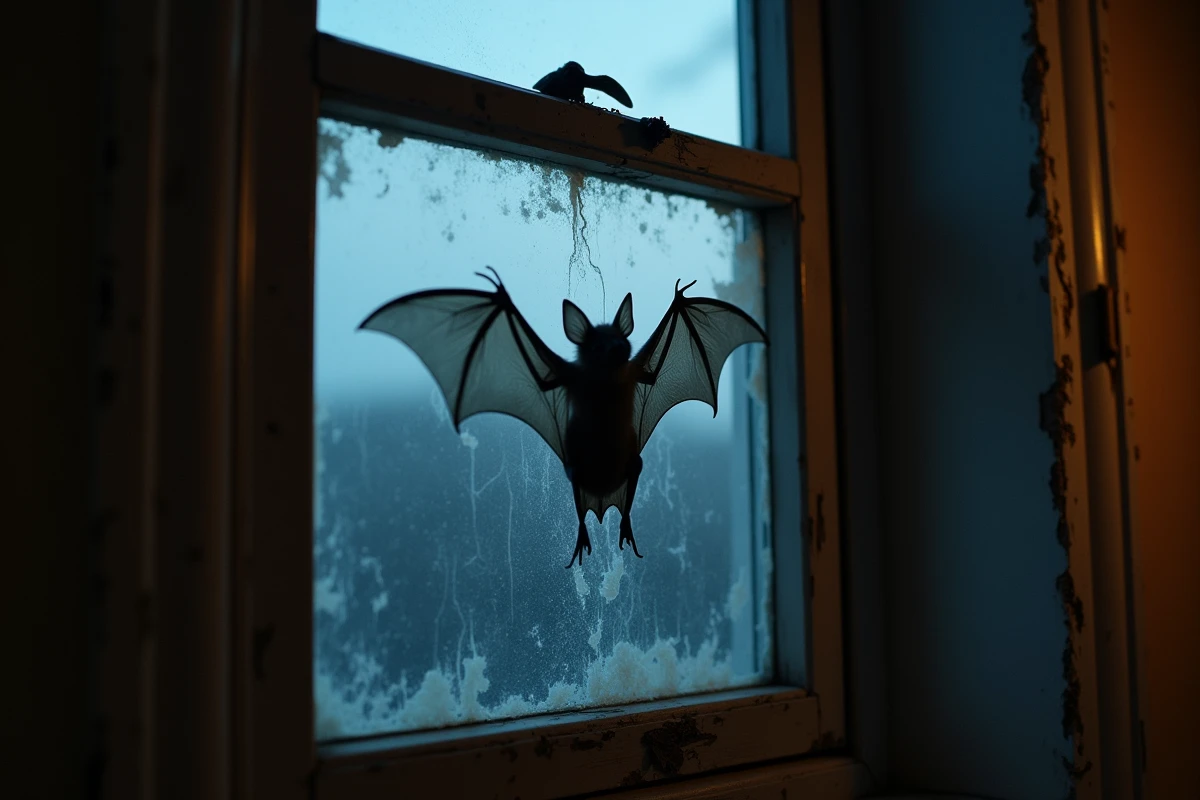
Shadow Work and Rebirth: The Bat as a Totem Animal
In North American indigenous traditions, the bat does not merely herald a change. It points to a specific area of inner life that requires attention.
Family Memories and Repressed Traumas
Teacher Jamie Sams documented this link as early as the 1990s: the bat as a totem animal is associated with shadow work, or psychological shadow work. Its appearance in a domestic space is read as an invitation to examine what has been buried, particularly within the family lineage.
This approach is markedly different from the simple symbolism of rebirth found in more generic interpretations. The transformation here is not passive (a renewal that happens on its own), but active: it demands a confrontation with discomfort.
Extrasensory Perception and Intuition
The bat navigates through darkness using echolocation, a capability that several spiritual traditions transpose into metaphor. The animal then symbolizes the ability to perceive what escapes ordinary senses.
In a domestic context, this reading suggests that the moment is ripe to rely more on one’s intuition regarding a pending decision. The darkness of the night, the bat’s natural environment, symbolically represents the areas of uncertainty in daily life.
Bat and Feng Shui: A Symbol of Happiness in East Asia
In Mandarin, the word for “bat” (蝠, fú) is a homophone for the word “happiness” (福, fú). This linguistic play has produced lasting symbolism.
Since the 2010s, the traditional “fu” motif has been reactivated in feng shui practices applied to urban apartments. A bat entering a dwelling is read as a concrete sign of imminent professional success, not as a vague or abstract omen.
However, this interpretation remains rooted in a specific cultural context. Importing it without nuance into a Western framework, where the animal is historically associated with fear, often leads to misunderstanding. Symbolism is not universal: it operates within a coherent belief system.
- The “fu” motif has appeared on decorative objects, clothing, and architectural ornaments in China for centuries
- In contemporary feng shui, the bat is sometimes represented in groups of five, symbolizing the five happinesses (longevity, wealth, health, virtue, peaceful death)
- The positive interpretation only applies if the animal is perceived as a natural visitor, not if it is injured or dead in the dwelling
Impact of Covid-19 on the Spiritual Perception of the Bat
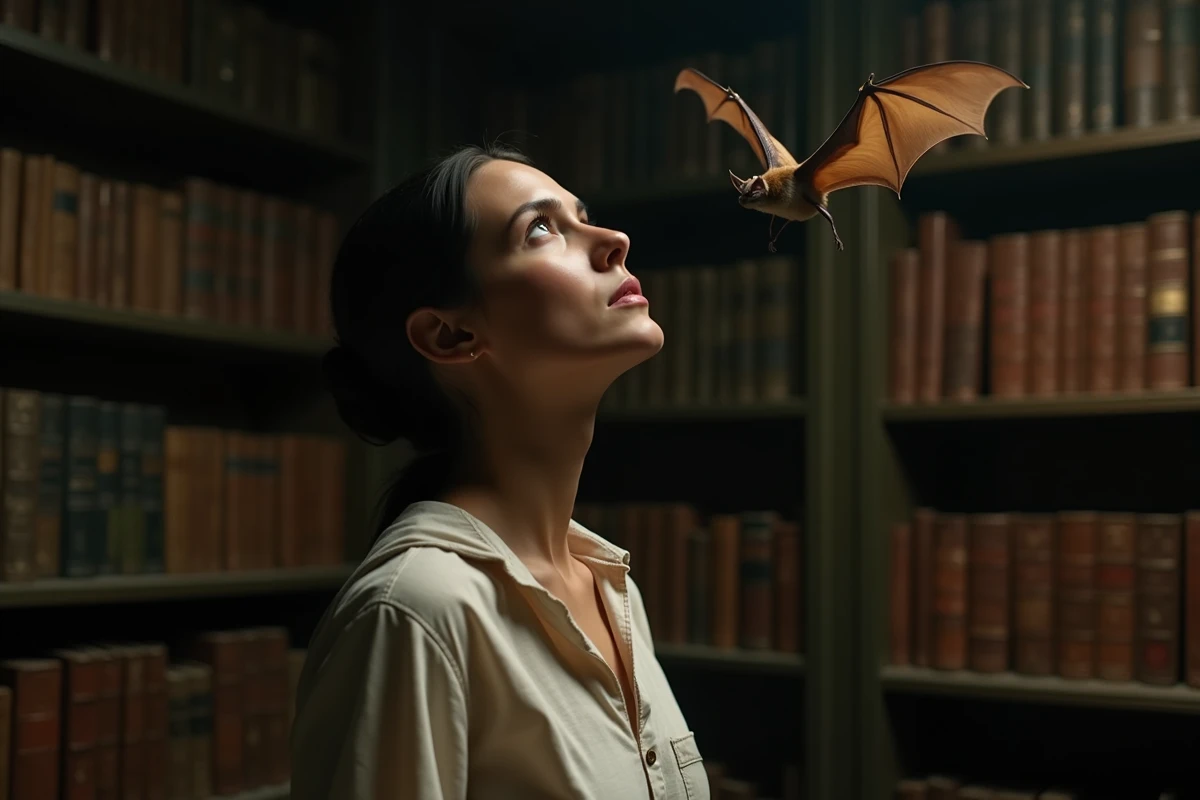
The pandemic has profoundly changed how the intrusion of a bat into an enclosed space is experienced and interpreted.
Environmental psychologists have observed that, since 2020, the fear of contamination has newly colored spiritual interpretations. A person confronted with a bat in their home more easily projects health anxiety onto the animal, making traditional mystical readings (transformation, rebirth, happiness) harder to spontaneously mobilize.
This phenomenon illustrates a point rarely addressed in mainstream spiritual literature: the symbolism of an animal is never fixed. It evolves with collective events. The same bat in the same living room does not carry the same symbolic weight in 2015 and in 2025.
Conversely, some contemporary spiritual practitioners have integrated this layer of anxiety into their interpretative framework. For them, the fear triggered by the animal becomes an inner work material, thus aligning with the logic of Native American shadow work.
Dreaming of a Bat in the House: Symbolic Reading of Dreams
The dream dictionary attributes to the bat a register centered on night, intuition, and transformation. The domestic scene (house, bedroom, living room) adds a dimension of intimacy: the message concerns the private sphere.
- Dreaming of a bat flying in a lit room is often interpreted as bringing to light a hidden aspect of oneself
- A stationary bat in a dream may symbolize a transformation on hold, a change that the dreamer hesitates to engage
- A group of bats refers in several traditions to community ties and nocturnal social life, suggesting relationships that play out away from public view
These readings remain tools for introspection, not predictions. Their value depends on what the dreamer concretely makes of them in their waking life.
The symbolism of the bat in the house does not have a single answer. What distinguishes a useful interpretation from a hollow one is its ability to provoke concrete reflection, whether on a professional project, a family memory, or a fear to be tamed.