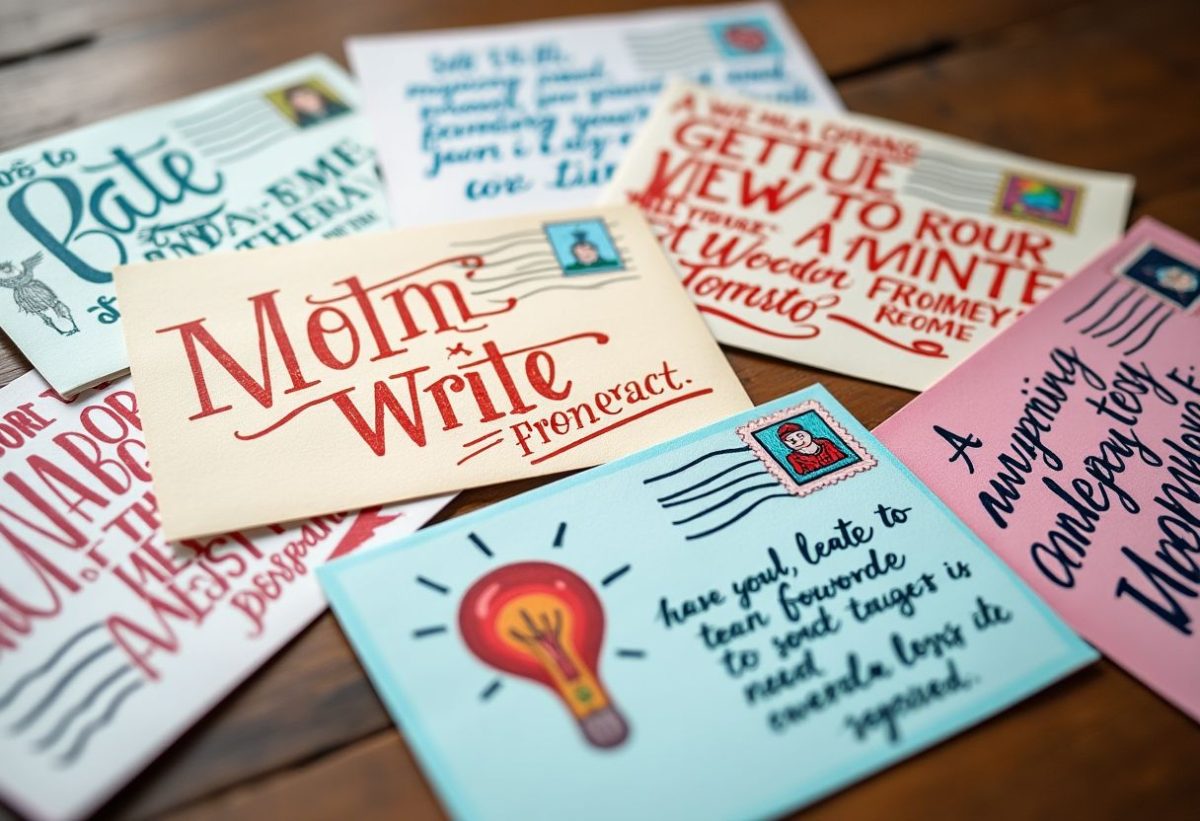
In the digital age, where instant messaging has overtaken traditional forms of communication, the postcard or greeting card stands out as a tangible vestige of human connection. Rather than just a simple piece of paper, it is a personal work of art, a reflection of authentic feelings that cannot be captured by a text message or an email. This article invites you to explore the delicate and poetic world of cards to send, through its historical, aesthetic, and emotional facets. By reconnecting with the practice of sending cards, we rediscover a tradition imbued with warmth and consideration, rekindling bonds sometimes strained by modern technology.
The origins and evolution of the postcard
The postcard, born at the end of the 19th century, quickly conquered the world as a privileged means of long-distance communication. Its history is a rich tapestry of transformations, reflecting the evolution of societies and technologies.
- The first sending took place in 1869 in Austria, an innovation that marked the beginning of a new era of correspondence.
- From the 1900s onwards, the era of the illustrated postcard began, featuring images of landscapes, famous monuments, or historical events.
- The First World War saw postcards become a crucial tool for soldiers, sending news to their distant families.
- Gradually, the postcard diversified, encompassing various occasions such as birthdays, religious holidays, and congratulations.
The greeting card: a timeless expression of feelings
Every greeting card sent is a tangible proof of the attention given to another. It allows emotions to express themselves in a dimension where immediacy does not prevail.
Greeting cards are often associated with year-end festivities, but their use extends far beyond this period. From birthdays to congratulations on a birth, they accompany key moments in life with a unique personal touch.
By carefully choosing a card and adding a handwritten message, one offers a gift that endures long after the moment has passed.
Creating a card to send: the art of personalization
Personalizing a card to send is not just about choosing a pretty design. The essence lies in adding personal details that touch the recipient.
- Choice of materials: Opt for quality paper and inks that enhance the colors.
- Thoughtful design: The choice of patterns and colors should reflect the personality of the recipient or the occasion being celebrated.
- Personalized message: A sincere and appropriate handwritten text makes all the difference.
- Add a personal touch: A photo, a drawing, or even a scent can make the card truly unique.
The benefits of sending a physical card in the digital age
In a world where notifications abound, offering a tangible pause in the form of a physical card is a gesture that stands out for its emotional impact.
A physical card does not just deliver a message; it becomes a cherished keepsake that is treasured. It is an invitation to slow down, to take the time to read and feel.
Unlike an electronic message, it does not disappear into the endless flow of communications but proudly displays itself on a refrigerator or a shelf.
Physical cards tell stories, they travel, sometimes crossing oceans to reach their destination, carrying with them a part of their sender.