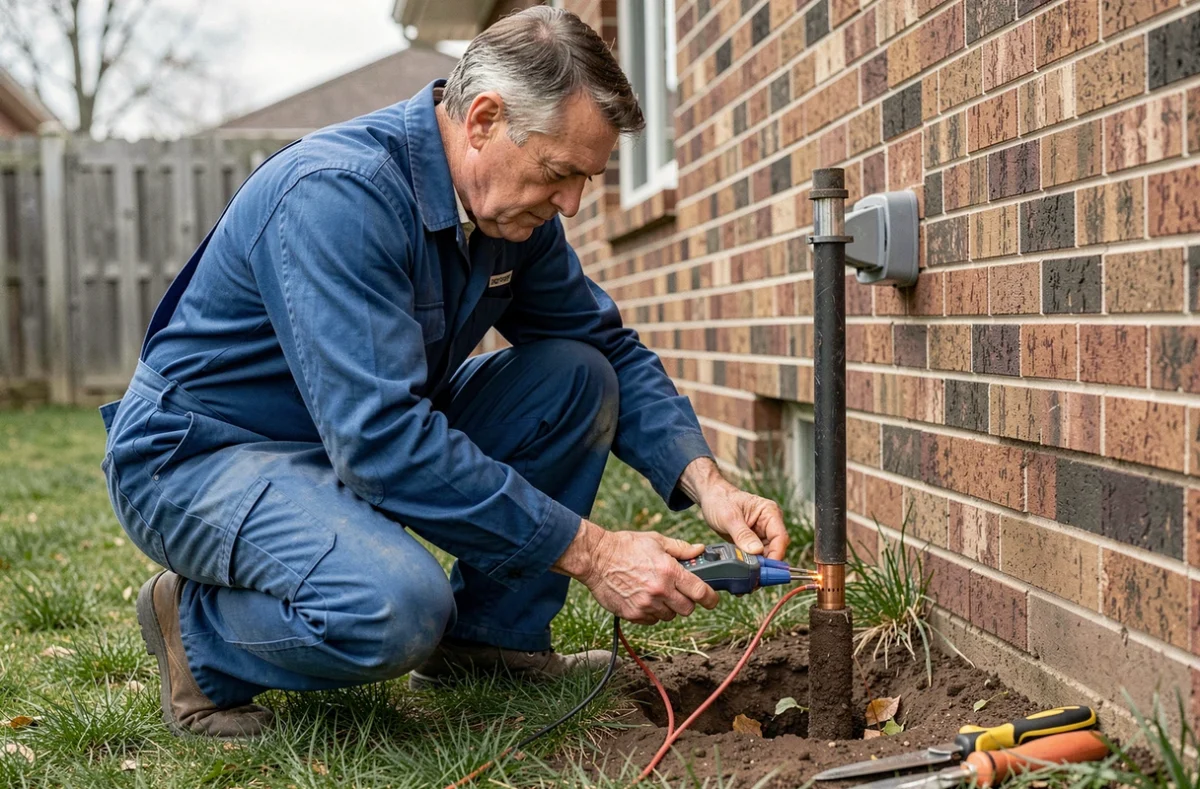
The resistance of the ground is a key element to ensure its safety and that of the people who use it. Knowing how to correctly measure the state of your ground with a multimeter can help you determine if it is functioning as intended or not. Fortunately, it’s not difficult! In this article, we will explain the steps to follow to measure the resistance of your ground with a multimeter, which you will do very easily by following the guide available on the site TerredHumus.
Preparing the multimeter for ground resistance measurement
Measuring ground resistance is an essential practice to ensure the integrity and safety of electrical systems. To perform this measurement, you need a multimeter, which can be very simple to use and provide accurate results. This guide will explain step by step how to prepare the multimeter to obtain a good ground resistance test.
Before performing any operation on an electrical circuit, you should always turn off the power starting from the top of the main panel until the circuit breakers are completely closed (there should be no power on the circuit). If the circuits are connected to battery-powered devices or an internal inverter, it will be necessary to remove these sources first to ensure that all potential voltages have been neutralized. Once the main source has been turned off and checked using the multimeter, you can secure your workspace adjacent to the wires you will be measuring (insulating sticks or other suitable tools).
The next step is to set up the multimeter according to its specific range to obtain an appropriate reading. On some older models, you may need to physically slide a slider between different modes; otherwise, you generally just need to press a corresponding numbered button displaying the required RANGE (200 Ohms – 2000 Ohms, 2000O – 20K …).
Understanding the measurement results
Ground resistance is an important indicator, as it allows you to assess whether there is a risk associated with using an electrical circuit. The measured value can be influenced by several factors, such as the materials used and the type of soil on which they are installed. In this article, we will see how to use a multimeter to measure the resistance of a ground and how to correctly interpret the results obtained.
First of all, it is important to note that different types of multimeters will give different readings depending on the type of test performed (for example, AC or DC voltage) and the specific mode chosen for each function considered. We will now explain step by step how to proceed to carry out an effective measurement with your multimeter:
First, ensure that the device is powered off before any handling. Next, connect the “Ground” and “Test” terminals corresponding to your device according to its technical documentation. This operation generally involves connecting these terminals with alligator clips to the corresponding terminals located on the back of your device, then set the multimeter switch to “Ohms” or even better “Auto-ranging Ohms” if available – which means that no manual change will be necessary to obtain an accurate reading based on the supplied current).
Interpreting the measured values
Measuring the resistance of a ground is a valuable tool for professionals and individuals who want to protect themselves against electric shocks. It is therefore an essential test that can be performed with a multimeter, provided you know the right way to read the results obtained.
The process of measuring the resistance of the shock protection device can be divided into 4 main steps: Check the on/off switch is OFF, perform the AC or DC test, choose an appropriate range, and interpret the values recorded by the multimeter. Here we will focus on the fourth step dedicated to interpreting the measured values.
Once your device has completed its tests and displays a stable reading (a necessary condition for obtaining a correct reading), it is time to see what this means exactly. If your system has a certified shock protection device, then the reading should generally be between 10 ohms and 100 ohms; more precisely, it should be between 25 Ω ± 5Ω. A lower reading indicates that your ground is insufficient or not connected to other points of the electrical circuit; while a higher reading will indicate on the contrary an excessively strong connection conflicting with certain international standards, for example, those related to the protection of material and human assets against electrical risks.