You are driving in the city, stuck in traffic, your left foot tired from pressing the clutch. You would like to maintain control over gear changes, but without that pedal that complicates everything. The semi-automatic gearbox meets this need exactly: it eliminates the clutch pedal while allowing the driver to decide when to change gears.
Semi-automatic gearbox and pedals: what changes concretely under your feet
The first instinct when getting into a vehicle equipped with a semi-automatic gearbox is to look for the clutch pedal. It doesn’t exist. The pedalboard only has two pedals: accelerator and brake.
An electronic control unit and mechanical actuators take care of the clutch for you. When you request a gear change (via the lever or paddles on the steering wheel), the system disengages, engages the next gear, and then re-engages. All of this happens in a matter of tenths of a second.
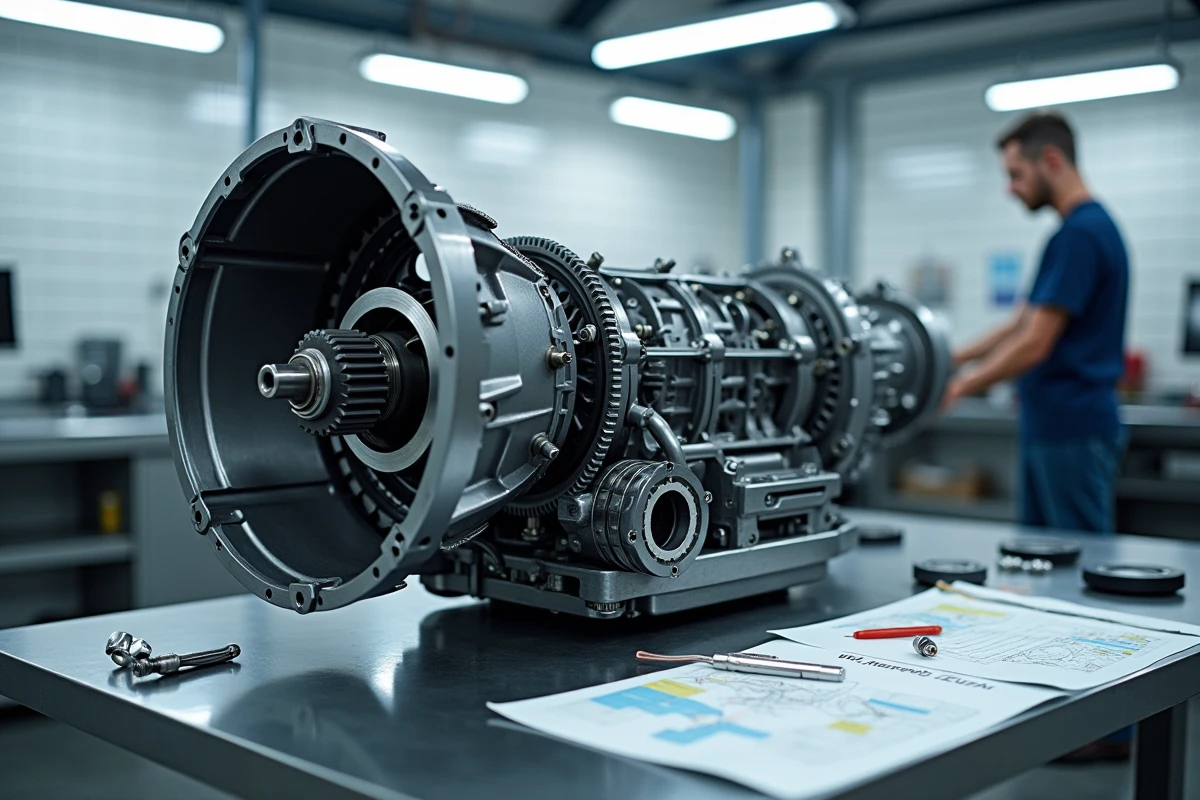
To understand in detail the principle of a semi-automatic gearbox for cars, you need to keep this idea in mind: the internal mechanics resemble that of a traditional manual gearbox, but human intervention on the clutch is replaced by electronics.
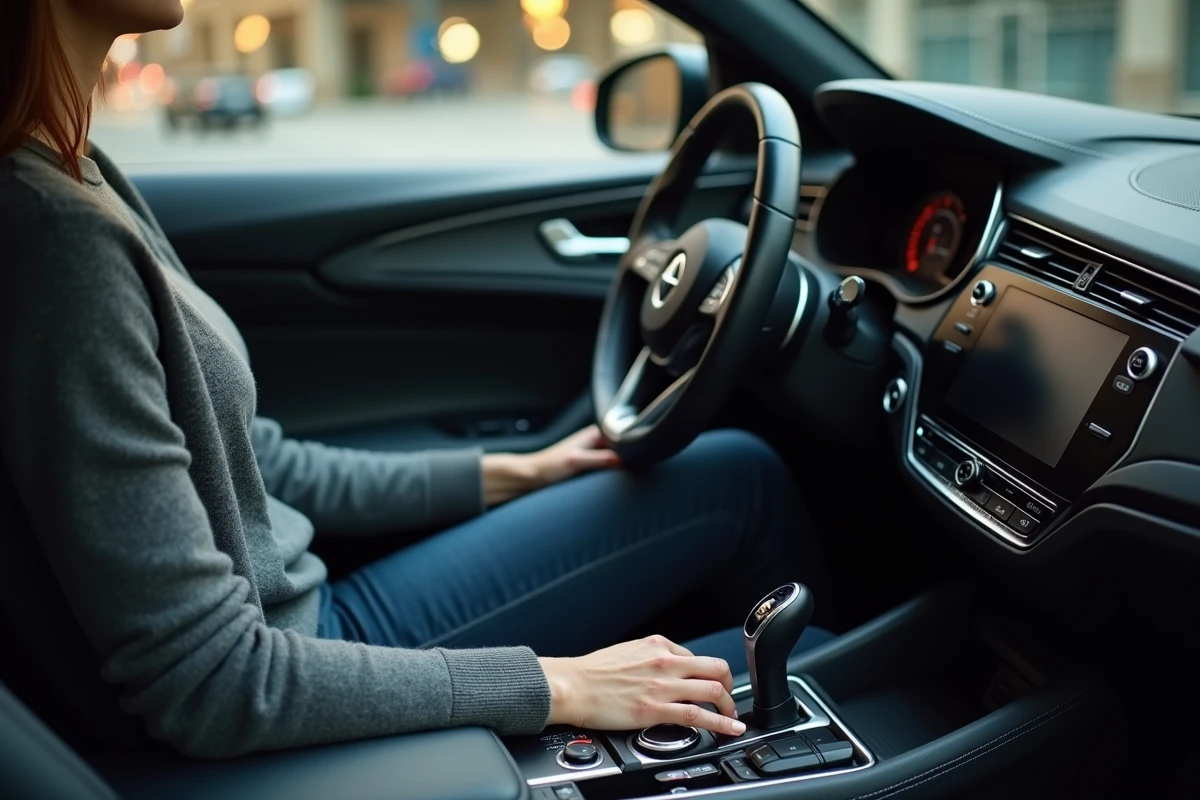
In practice, the driver has two modes available:
- The automatic mode, where the control unit manages the gear changes alone according to engine speed and requested load
- The sequential mode, where the driver pushes the lever towards “+” or “-” (or uses paddles) to shift gears one by one
- On some models, a sport mode that delays gear changes to keep the engine in the rev range
Single clutch or double clutch: the choice that changes everything
Not all semi-automatic gearboxes are created equal. The most significant distinction for driving pleasure concerns the number of clutches.
The single-clutch automated gearbox
This is the oldest version. It uses a single clutch disc, just like a manual gearbox. The result: noticeable jolts during gear changes, especially at low speeds. In urban traffic, these micro-cuts in torque quickly become unpleasant.
Single-clutch automated gearboxes are in sharp decline in new ranges. Manufacturers are gradually abandoning them in favor of smoother solutions. If you buy a used vehicle equipped with this type of transmission, test it in the city before signing.
The double-clutch gearbox
Here, two clutches work alternately. While you are driving in third gear, the system is already pre-engaging fourth gear on the second clutch. The shift occurs without interruption of torque, in an almost imperceptible manner.
Names vary by manufacturer: DSG at Volkswagen, EDC at Renault, DCT at other brands. The principle remains the same. The double clutch offers comfort close to a traditional automatic with the responsiveness of a manual.
Maintenance and reliability of a semi-automatic gearbox: points of caution
You may have heard that a semi-automatic gearbox is expensive to maintain. The answer depends on the type of transmission.
On a single automated gearbox, the clutch wears out like on a manual gearbox, sometimes faster due to the automation that does not always replicate the finesse of an experienced driver. Replacing the clutch and actuators can represent a significant budget.
On a double-clutch gearbox, wear is better distributed between the two discs. Changing the gearbox oil is one of the operations not to be neglected. Each manufacturer recommends a different interval, but skipping this maintenance exposes you to costly malfunctions.
- Check the maintenance history if you are buying used, especially the gearbox oil change
- Be attentive to jolts or hesitations during gear changes: these are the first signs of wear
- A check engine light may indicate a problem with an actuator or position sensor, which needs to be diagnosed quickly
Automatic and semi-automatic gearbox license: what the regulations say
Are you hesitant to buy a semi-automatic vehicle because you fear being limited later? This regulatory barrier has been largely lifted.
Since the easing that came into effect at the end of 2019, a driver holding a “B license for automatic gearbox” can lift the restriction after a 7-hour training course at a driving school, without having to retake the practical exam. This license covers all vehicles without a clutch pedal, including semi-automatic gearboxes.
This change has altered the decision-making process for many drivers. Taking the license on a vehicle with an automatic or semi-automatic gearbox no longer locks you into a definitive choice. The additional training is short and accessible.
Semi-automatic gearbox in the city and on the road: for what use
In urban driving, the semi-automatic gearbox (especially the double clutch) provides real comfort. No need to juggle with the clutch in traffic jams. The automatic mode manages the gears, and the driver can focus on the traffic.
On the road or highway, the sequential mode regains its interest. When going downhill, downshifting manually allows you to take advantage of engine braking without touching the brakes. When overtaking, forcing a lower gear gives an immediate response.
The semi-automatic gearbox is suitable for both daily commutes and more spirited driving. It is this versatility that explains the popularity of double-clutch systems, adopted on both city cars and sports vehicles.
Semi-automatic transmissions continue to evolve to adapt to hybrid powertrains, where smooth torque transitions are essential for advanced driver assistance systems. The choice between single automated and double clutch remains the priority criterion to decide, well before the brand or model of the vehicle.