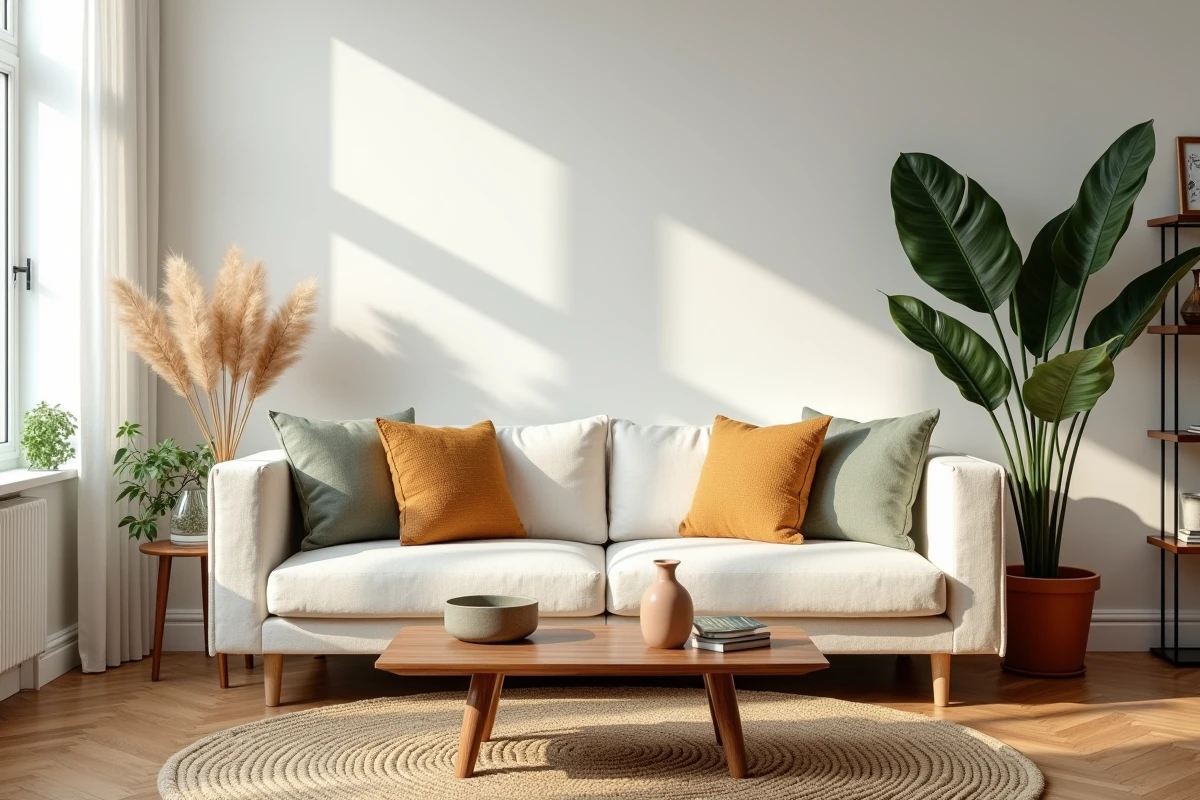
A living room wall that is peeling, a wooden terrace grayed by UV rays, a garden bed lacking structure: most decor projects start from a concrete irritant, not from a desire for “style.” Starting from this friction point allows for the selection of the right materials and interventions, without accumulating objects that will eventually clutter.
Natural coatings and low-carbon paints for your interior walls
We repaint a wall to change the ambiance, but the choice of product determines the durability of the result and the air quality in the room. Since the transposition of European directives on VOCs, ranges of paints with high solvent content are decreasing. Paints rated “A+” and those with an eco-label now dominate the shelves.
On the ground, the difference is felt at the time of application. A lime or clay coating naturally regulates the humidity of a room, which changes the game in a bathroom or a north-facing bedroom. The HQE Alliance and the CSTB report a clear increase in these bio-based and geo-based materials in individual housing, driven by RE2020.
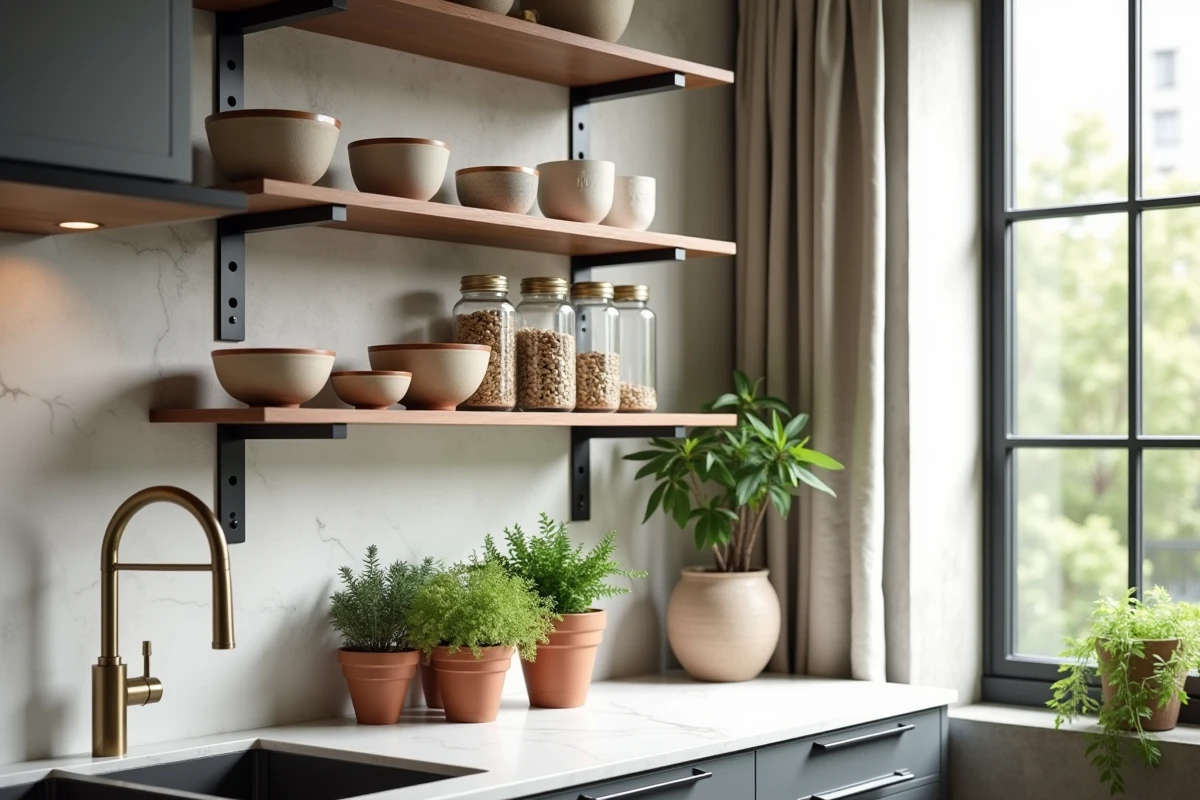
By consulting the decor section on the Ta Maison Ton Jardin website, one can quickly spot combinations of earth tones that work well on a living room wall as well as on an open kitchen backsplash.
A common pitfall: applying a natural coating on a poorly prepared surface. Lime does not adhere to an old vinyl covering without prior sanding. Plan for an appropriate primer; otherwise, the result will blister within a few months.
Reclaimed wood in interior decor and garden furniture
Wood remains the most versatile material for creating a continuity between indoors and outdoors. It can be found as a partition in a living room, as a wall shelf in an entryway, or as a border in the garden. What changes is the source: reclaimed wood (pallets, construction scraps, formwork boards) increasingly replaces new wood in individual decor projects.
For a terrace furniture piece, feedback varies on the durability of raw pallet wood against the elements. Without treatment, it grays within a season. An eco-labeled outdoor stain (low VOC content) applied in two coats extends its lifespan by several years. Beware of cheap “oak tinted” stains that turn orange in the sun.
Three practical uses for reclaimed wood
- Headboard made from sanded and waxed formwork boards, fixed directly to the wall with concealed brackets. The raw finish works in both a bedroom and a studio.
- Raised planter made from assembled chevrons, placed on the terrace or balcony. Useful for structuring a vegetable corner without disturbing the soil.
- Openwork partition between living room and entryway, mounted on a frame made of battens. It filters light and creates a transition without closing off the space.
In each case, sanding with 120 then 180 grit makes the difference between a “scrap recovery” result and a piece of furniture that holds its own against new items.
Connected solar lighting for terraces and garden paths
Installing three solar lights along a path takes twenty minutes. Smartphone-controlled solar lighting transforms a basic garden into a usable space in the evening, without wiring or additional electricity bills. Solar LED bollards with motion detectors cover security needs, while variable intensity solar string lights create ambiance around a table.
The solar sector for outdoor lighting has gained reliability in recent years, with batteries lasting several hours even after a cloudy day. Connected models allow for programming the lighting, adjusting the intensity, or grouping multiple fixtures into a single scenario from an app.
Points to check before purchase
- A minimum IP65 protection rating for use in the ground. Below this, moisture can damage the circuits within a few months.
- The battery capacity in milliamp-hours: the higher it is, the longer the nighttime autonomy, even in overcast weather.
- Compatibility with an open home automation protocol (Zigbee, Wi-Fi) if you want to integrate garden lighting into an existing system in the house.
Structured vegetation: plants and flowers as landscaping elements
Planting without a plan produces a bushy bed in June and a wasteland in November. Structuring vegetation around persistent volumes (boxwood, grasses, lavender) ensures a readable garden all year round. Seasonal flowers can then be added for color.
Indoors, the principle remains the same. An isolated plant on a windowsill goes unnoticed. A group of three pots of different sizes, placed on a dedicated piece of furniture or a metal stand, creates a true focal point in a living room or entryway. Succulents require little maintenance and can tolerate missed watering, making them suitable for less frequented rooms.
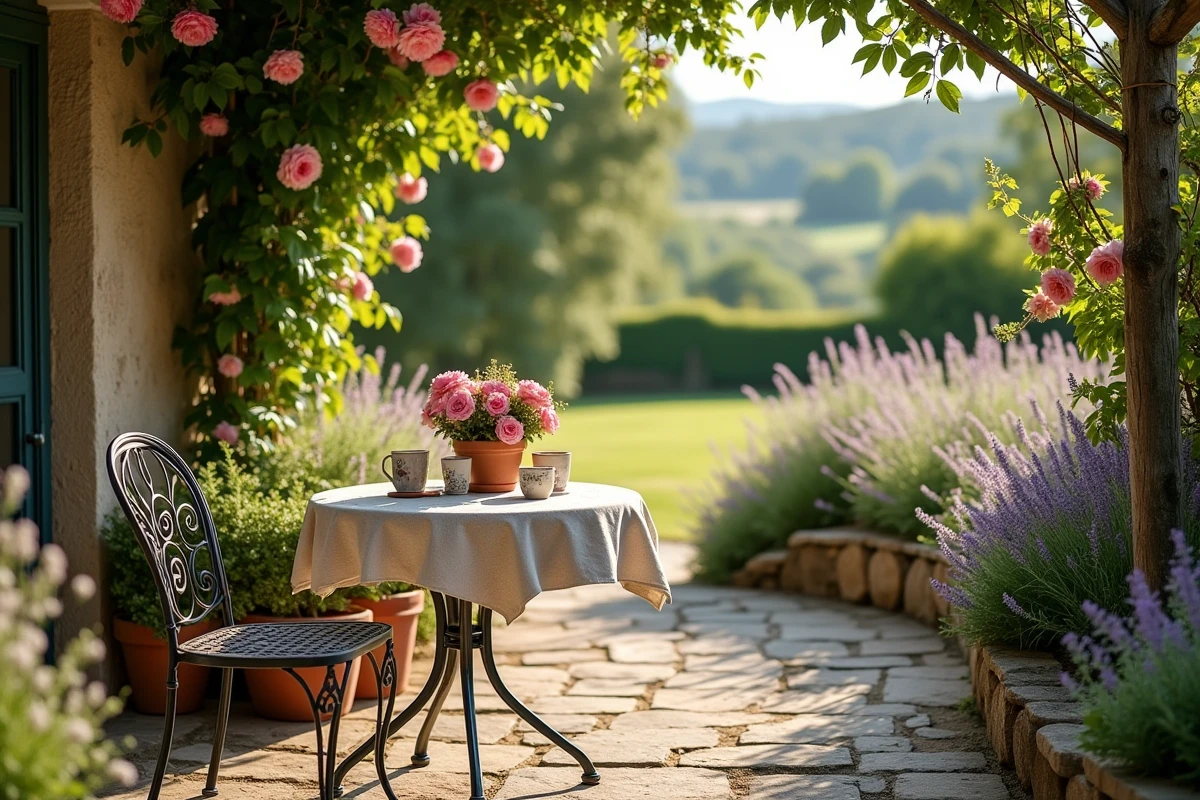
In the garden, a mixed border (low perennials in front, evergreen shrubs behind) works better than a uniform hedge to delineate a terrace space. It adds visual depth and attracts pollinators, which also benefits the neighboring vegetable garden.
The common thread among all these interventions is the coherence of materials and shades between indoors and outdoors. The same wood, the same palette of earthy colors from the living room to the garden is enough to create a sense of unity without multiplying purchases. The constraint of budget often leads to the best decisions: fewer objects, better chosen, better placed.