
The ketogenic diet relies on a drastic reduction of carbohydrates to keep the body in ketosis, a metabolic state where fats become the primary fuel. Introducing alcohol into this equation poses a specific biochemical problem: the liver prioritizes the elimination of ethanol over any other metabolic task, including the production of ketone bodies.
Not all alcoholic beverages are equal when faced with this constraint. Some contain sufficiently low carbohydrates to remain compatible with ketosis, while others sabotage it in just a few sips. The sorting should be done on concrete bases rather than on preconceived ideas.
Metabolism of ethanol in ketosis: what really happens in the liver
When you consume alcohol, the liver treats it as a priority toxin. The production of ketone bodies is temporarily put on hold while ethanol is converted into acetaldehyde and then into acetate. This mechanism does not permanently interrupt ketosis, but the production of ketones is suspended as long as alcohol is circulating.
This delay varies depending on the amount ingested. A glass of dry wine will be metabolized in a few hours. Three sweet cocktails can block ketosis for a much longer duration, not only because of the ethanol itself but also due to the carbohydrates they contain.
A often overlooked point: alcohol tolerance decreases significantly on a ketogenic diet. With very low glycogen stores, ethanol passes into the bloodstream more quickly. The effect felt after a single glass can be equivalent to that of two or three glasses off-diet. When exploring alcohol options for a ketogenic diet, this physiological reality should guide every choice.
Spirits, dry wine, beer: carbohydrate content by category

Pure spirits (vodka, gin, whiskey, tequila, unflavored rum) contain zero carbohydrates once distilled. This is the simplest category to integrate into ketosis, provided you don’t drown them in fruit juice or sweet soda. A spirit served neat, with sparkling water or a twist of lemon, remains neutral in terms of carbohydrates.
Dry wine represents the most reliable intermediate option. A glass of dry white wine, brut champagne, or light red wine provides a modest amount of residual carbohydrates. Sweet wines, dessert wines, or ports, on the other hand, contain residual sugars that can easily exceed the daily limit tolerated in ketosis.
Classic beer poses the biggest problem. Derived from the fermentation of grains, it retains a significant carbohydrate load per glass. Light beers or “low-carb” options, which are mainly emerging in North America, show reduced contents but are rarely as neutral as a pure spirit.
- Pure spirits (vodka, gin, whiskey, unflavored rum): no carbohydrates, provided you avoid sweet mixers
- Dry white wine, brut champagne, light red wine: low residual sugar content, compatible in moderate quantities
- Classic beer and craft beer: carbohydrate load too high for most strict ketogenic protocols
- Ready-to-drink cocktails and flavored premixes: often loaded with added sugars, colorings, and additives, to be systematically avoided
The trap of “non-alcoholic” drinks and mixers
The rise of “non-alcoholic” spirits might seem like good news for those wanting to limit ethanol while staying in ketosis. In practice, some “0.0%” gin or rum contain more carbohydrates than their alcoholic versions. To compensate for the absence of alcohol, manufacturers add fruit juice, glycerin, or sugar. The carbohydrate profile of these drinks then resembles that of a soft drink more than that of a dry spirit.
The same observation applies to tonics, syrups, and sodas used as mixers. A classic gin and tonic can contain as many carbohydrates in the tonic alone as in a beer. The safest alternative remains plain sparkling water, possibly flavored with a wedge of lime or a few fresh mint leaves.
Hard seltzers with very low carbohydrate content constitute a relatively new category that explicitly targets the low-carb audience. These drinks, made from sparkling water and fermented alcohol, are beginning to arrive on the European market after rapid development in North America since 2022. However, their composition deserves careful label reading, as flavored versions may include non-negligible added sugars.
Alcohol and weight loss on keto: guaranteed slowdown
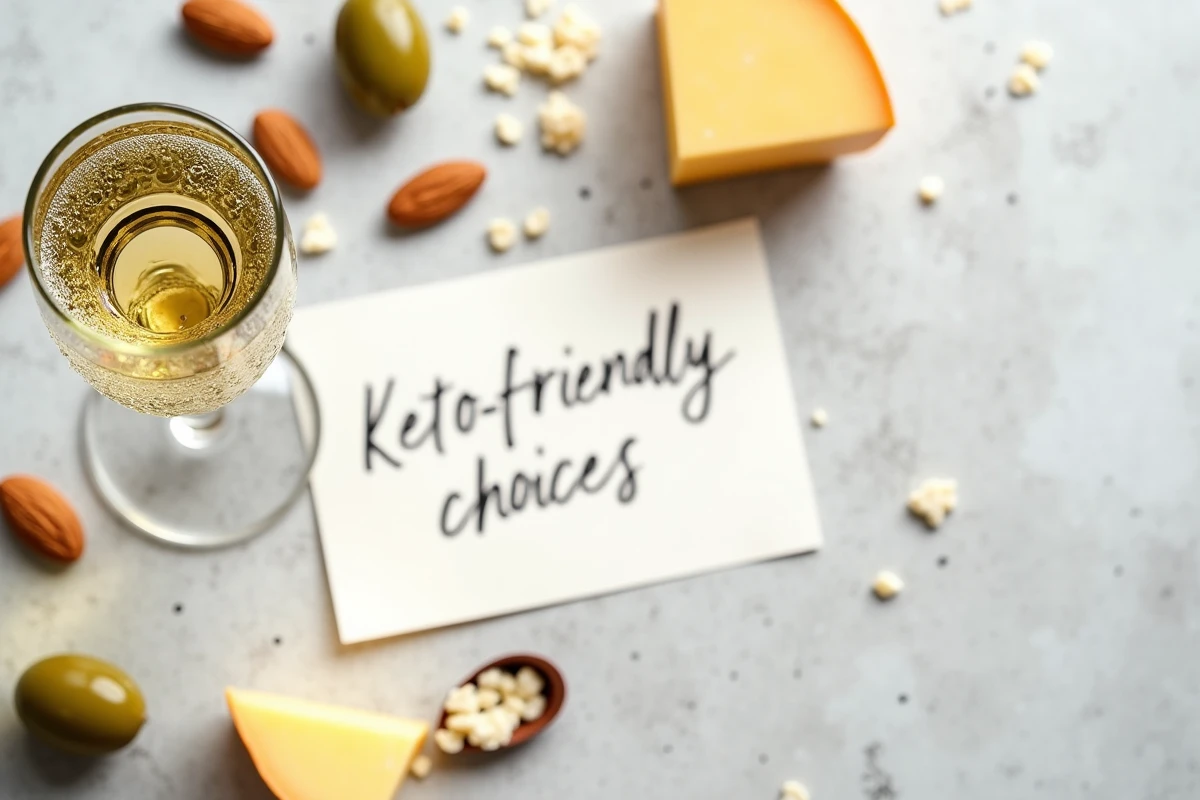
Even with a perfectly calibrated drink choice in carbohydrates, alcohol slows weight loss on a ketogenic diet. Ethanol provides calories (about seven per gram) that the body uses as a priority. As long as these calories are being processed, the burning of body fat is put on hold.
This mechanism does not mean that having a drink cancels out a week of efforts. It means that the active weight loss window shrinks proportionally to the frequency and amount consumed. For someone following a ketogenic diet primarily for weight loss, regular alcohol consumption, even “keto-compatible,” constitutes a measurable hindrance.
The available data does not allow for setting a universal threshold beyond which ketosis would be systematically broken. The response varies according to individual metabolism, level of physical activity, and the overall composition of the diet that day.
Three concrete guidelines for drinking without sabotaging ketosis
- Favor a pure spirit or a glass of dry wine rather than a mixed cocktail: the mixer often does more damage than the alcohol itself
- Always read the labels of “keto-friendly,” “non-alcoholic,” or “low-carb” drinks: the marketing label does not guarantee low carbohydrate content
- Space out drinking occasions and compensate with increased hydration: dehydration, already favored by ketosis, worsens significantly with alcohol
The ketogenic diet tolerates alcohol as long as you choose drinks with nearly zero carbohydrate content and limit frequency. Compatibility exists, but it comes at a metabolic cost that every drink reminds the liver of.